Oscars: Kumail Nanjiani's Tasteless Schindler's List Joke Explodes Online
The glitz and glamour of the Academy Awards are often punctuated by memorable moments, some heartwarming, others controversial. At a recent ceremony, comedian and presenter Kumail Nanjiani inadvertently created one of the latter, sparking a firestorm of criticism for a highly insensitive joke about Steven Spielberg's harrowing Holocaust drama,
Schindler's List. What was intended as a lighthearted gag about shortening film titles quickly devolved into a widespread online outcry, thrusting the issue of comedic taste and historical sensitivity into the spotlight. The incident has led to extensive discussions across social media, with many condemning Nanjiani's choice of material and questioning the judgment exercised on such a global platform. This single misstep, now widely known as the
Kumail Nanjiani Holocaust Joke Oscars controversy, serves as a stark reminder of the fine line between edgy humor and genuinely offensive content, especially when touching upon deeply painful historical events.
The Ill-Conceived Gag: From Short Films to 'Schindler's Post-It'
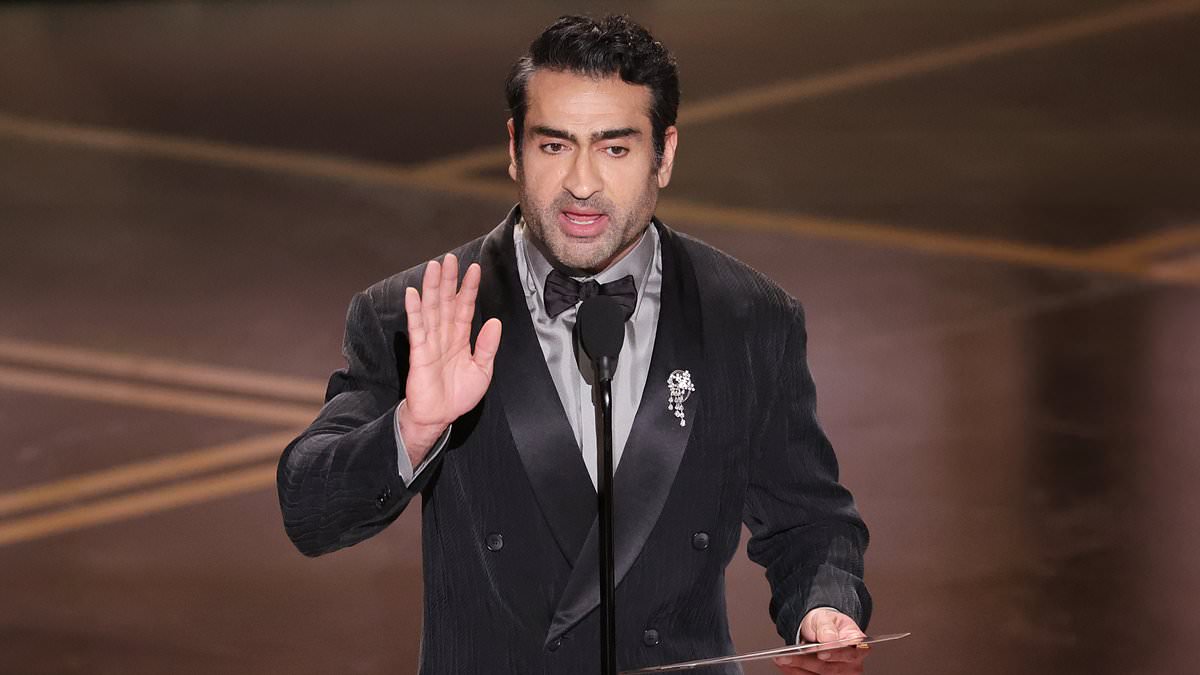
The contentious moment unfolded as Kumail Nanjiani took the stage to present the award for Best Live Action Short Film. His routine centered on the idea that many feature-length movies could benefit from being condensed into shorter versions, saving audiences time. He demonstrated this concept by humorously renaming classic films to truncated titles. For instance, "It's A Wonderful Life" became "It's A Wonderful Month," and "The King's Speech" was rebranded as "The King's Tweet." The segment seemed innocuous enough until Nanjiani delivered the line that would ignite a firestorm: "Schindler's Post-It."
The intended pun, reducing a 'list' to a 'Post-It,' fell flat in the room and resonated even more poorly with viewers at home. The audience's muted reaction in the Dolby Theatre was a precursor to the digital explosion that followed. The sheer incongruity of pairing a lighthearted stationery item with a film of such immense historical gravity immediately struck many as profoundly misguided. The joke lacked not only comedic impact but, more importantly, a fundamental understanding of the film's subject matter. For more details on the initial fallout, you can read about
Kumail Nanjiani's 'Schindler's Post-It' Joke Sparks Oscar Fury.
Why "Schindler's List" Is Beyond Reproach for Frivolous Humor
The core of the backlash against Nanjiani's joke lies in the profound historical and emotional weight carried by
Schindler's List. Steven Spielberg's 1993 masterpiece tells the true story of Oskar Schindler, a German industrialist who saved approximately 1,200 Jews from the Holocaust by employing them in his factories during World War II. The film is a harrowing, meticulously researched portrayal of one of humanity's darkest chapters – the systematic extermination of six million Jews by Nazi Germany. It is a cinematic monument to the victims, a testament to unimaginable suffering, and a vital educational tool for future generations.
To reduce such a title to a casual, almost flippant pun like "Schindler's Post-It" demonstrates a severe lack of judgment and historical sensitivity. It trivializes the immense suffering, the heroic sacrifices, and the profound moral lessons embedded within the narrative of the Holocaust. This isn't merely about political correctness; it's about respecting the memory of those who perished and acknowledging the historical trauma that continues to impact survivors and their descendants. The film itself is a solemn piece of art designed to ensure "never again" – a message utterly undermined by casual humor. Making light of such a subject can unintentionally normalize or diminish its horror, which is why jokes about the Holocaust are almost universally condemned as unacceptable.
Online Outrage and Demands for Accountability
The moment Nanjiani uttered "Schindler's Post-It," social media platforms, particularly X (formerly Twitter), erupted with condemnation. Viewers were quick to express their disgust and disbelief, with many calling the joke "tasteless," "cheap," and even "antisemitic." The sentiment was overwhelmingly negative, with users questioning how such a joke could have been approved for a global broadcast.
*
"Can't say that Schindler's List joke was uh in any good taste!" – A common sentiment reflecting immediate discomfort.
*
"A list isn't a form of stationery, so 'Schindler's post-it' doesn't make any sense. Bad joke." – Pointing out the joke's comedic failure beyond its insensitivity.
*
"That was as CHEAP leftist antisemitic comment by this f***, Kumail Nanjiani... Schindler's Post-It. Don't invite him back." – A harsher reaction, calling for severe consequences.
The backlash wasn't limited to individual expressions of offense; it quickly escalated into calls for accountability. Many viewers demanded that Nanjiani face consequences, with some advocating for a lifetime ban from the Oscars stage. This strong reaction underscores the public's expectation for presenters at such prestigious events to exhibit a higher degree of cultural and historical awareness. The incident became a prime example of how quickly a misstep in live broadcasting can generate a viral negative response, forever linking the
Kumail Nanjiani Holocaust Joke Oscars event with controversy. For a deeper dive into the calls for a ban, explore
Viewers Demand Ban After Kumail Nanjiani's Oscar Holocaust Gag.
The Broader Conversation: Comedy, Sensitivity, and Public Figures
This incident reignited an ongoing debate about the boundaries of comedy, particularly when performed by public figures on high-profile stages. While comedy often pushes envelopes and challenges conventions, there are certain subjects, like the Holocaust, that are widely considered sacred and unsuitable for humor. The Nanjiani controversy highlights several critical points:
1.
Historical Literacy: Public figures, especially those speaking to a global audience, are increasingly expected to possess a degree of historical and cultural literacy. A joke that inadvertently trivializes genocide demonstrates a significant lapse in this regard.
2.
The Role of the Writer's Room: Questions naturally arise about the writing and vetting process for Oscar presenter scripts. How did such a joke make it past multiple layers of review? This suggests a potential gap in judgment within the production team.
3.
Audience Expectations: Today's audiences are more diverse and connected than ever. They are quick to call out perceived injustices or insensitivities, holding celebrities and institutions to higher standards. The rapid mobilization of online condemnation is a powerful force.
4.
Impact of Digital Media: In the age of instant replays and viral clips, a single misstep can be amplified globally within minutes, creating a lasting digital footprint that can significantly impact a celebrity's public image.
The Kumail Nanjiani incident serves as a crucial learning moment for comedians, writers, and event organizers. It underscores the vital importance of exercising extreme caution and empathy when crafting humor, particularly when dealing with topics of profound historical pain and suffering. The goal of comedy should be to unite, to provoke thought, or to simply entertain, but never to inadvertently diminish the memory of atrocities.
Conclusion: A Cautionary Tale from the Oscars Stage
The
Kumail Nanjiani Holocaust Joke Oscars controversy stands as a stark reminder of the immense responsibility that comes with speaking on a global stage. What might have been conceived as a harmless pun transformed into a deeply offensive gaffe, sparking outrage and a significant blowback against the comedian. The incident underscores that while humor can be a powerful tool, it must be wielded with profound sensitivity, especially when touching upon historical events as tragic and impactful as the Holocaust. The legacy of
Schindler's List is one of solemn remembrance and education, and any attempt to diminish its gravity, however unintentional, will inevitably face severe criticism. This episode serves as a cautionary tale for all public figures and event organizers, emphasizing the critical need for empathy, historical awareness, and stringent vetting processes to ensure that entertainment never comes at the expense of respect for humanity's darkest chapters.